


The Seattle Seahawks and the New England Patriots earned their way to the Super Bowl this past weekend. At this level, everyone has talent. What separates the winners from everyone else? If you watched the games, you saw it in action. Preparation is the difference. Quarterbacks reading the defense; coaches calling the right plays; defenders anticipating where the receiver is going … it’s all about being prepared. When a quarterback walks to the line, he already knows what’s coming. At least that’s the goal. The other team’s job is to be one step ahead—anticipating what’s being anticipated.
You need the same approach with your benefits broker right now. Employee benefits has become a game, and you have to play to win. In an industry with words like, “revenue cycle management,” it should be apparent by now that in the game of employer sponsored healthcare, your opponents (brokers, carriers, and health systems) are playing to take as much money as they can from your company and its employees. You have to play the other side of that, keeping them from doing so. You need to play to win.
You’re likely to hear from your broker earlier than usual this year. Some are terrified of losing clients. Others will see an opportunity to take your business from someone else. Either way, you’re about to get bombarded.
Expect outreach to start in Q1. Meeting requests will pile up through Q2. By summer, it could be a frenzy.
Will you be a company in control, or will you fall into the same pattern for another year by mismanaging the clock?
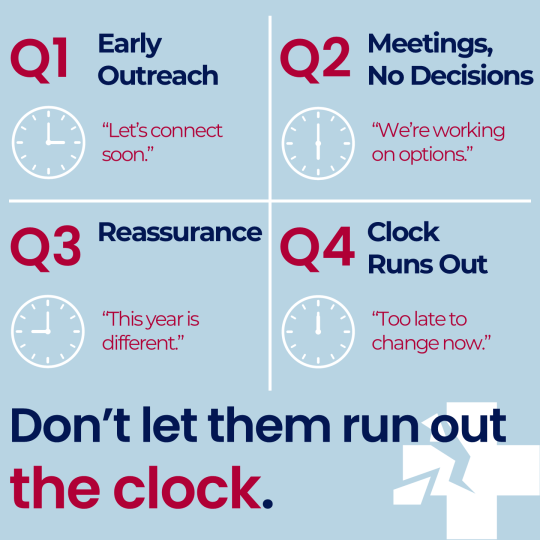
The play they’re about to run
In football, the GM doesn’t call plays or throw passes, but the season hinges on their decisions. How they build the roster, how they manage the salary cap, and who they draft in the first round. Miss at the top, and no amount of execution can save you.
Choosing a benefits broker carries the same weight. Your broker touches everything: plan design, cost containment, vendor strategy, renewals, and employee experience. If they’re not performing at a high level, you’ll pay for it at every renewal for years.
NFL general managers spend their careers evaluating talent and living with the consequences. Even then, drafting a quarterback is different. It’s the pick that defines their tenure.
Most HR leaders never get that kind of practice. And the game has changed dramatically since the last time you made this pick.
That’s the seat you’re in right now.
If you want to keep your current broker
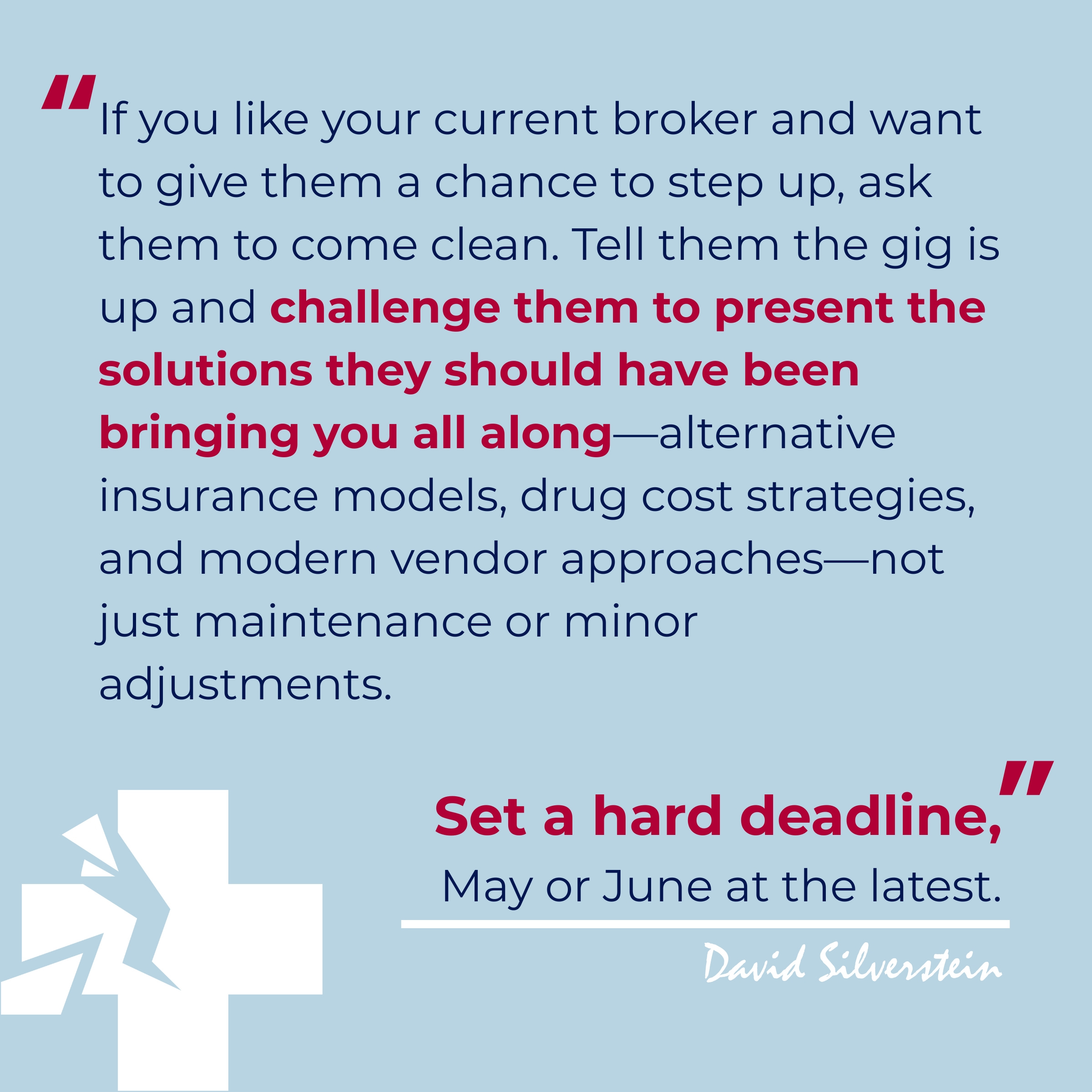
If you like your current broker and want to give them a chance to step up, ask them to come clean. Tell them the gig is up and challenge them to present the solutions they should have been bringing all along—alternative insurance models, drug cost strategies, modern vendor approaches—not just maintenance or minor adjustments.
Set a hard deadline: May, or June at the latest. If they can’t deliver by then, you’ll know where things stand, and you’ll still have time to make a change before summer, when your best options start disappearing. Wait any longer than Q2, and you’ll find yourself locked in for another year.
If you’re ready to evaluate alternatives
Start now. Begin educating yourself on what’s changed in the market; understand what modern benefits strategies look like and what questions to ask. If you don’t start this process immediately, the odds of making meaningful changes in 2026 drop to nearly zero.
The brokers who understand what’s coming are already being selective about who they work with. They’re choosing their clients now, in Q1 and Q2. By summer, they’ll be committed.
Championship teams study film because they know what’s coming before it happens. They don’t wait to see the formation and then react. They prepare.
You need to do the same.
You’re on the clock; and the clock is ticking!