


In the NFL, general managers don’t get many chances to draft a franchise quarterback. Miss once, and you set the team back years. Miss twice, and you may not get a third shot.
Most HR leaders are in a similar position, whether they realize it or not.
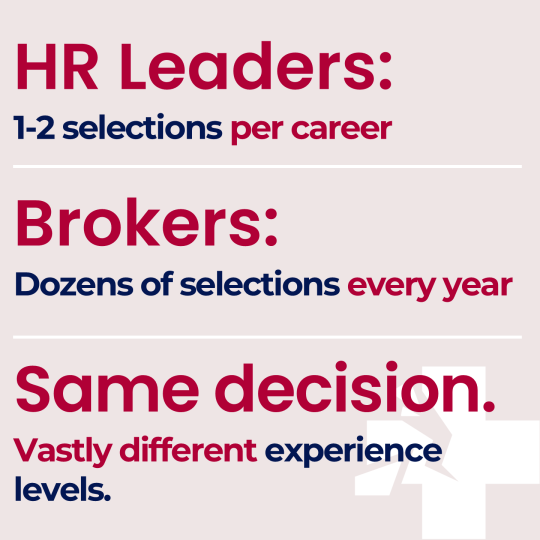
Over the course of a career, an HR executive or chief financial officer might oversee one, maybe two broker or benefits consultant selections. That’s it. Meanwhile, brokers and consultants participate in dozens of competitive selection processes each year. They know the timing, the pressure points, and how to manage expectations to control the process.
You’re being asked to make one of the most important decisions affecting your workforce and your balance sheet with minimal practice, while the people on the other side of the table do this for a living.
That’s a lopsided game.
The general manager problem in HR
In football, the GM doesn’t call plays or throw passes, but the season hinges on their decisions. How they build the roster, how they manage the salary cap, and who they draft in the first round. Miss at the top, and no amount of execution can save you.
Choosing a benefits broker carries the same weight. Your broker touches everything: plan design, cost containment, vendor strategy, renewals, and employee experience. If they’re not performing at a high level, you’ll pay for it at every renewal for years.
NFL general managers spend their careers evaluating talent and living with the consequences. Even then, drafting a quarterback is different. It’s the pick that defines their tenure.
Most HR leaders never get that kind of practice. And the game has changed dramatically since the last time you made this pick.
That’s the seat you’re in right now.
What’s changed since your last selection?
If you last selected a broker five or six years ago, you weren’t choosing for today’s market.
At the time, many of the tools that now define an effective benefits strategy either didn’t exist or weren’t meaningfully deployable, including:
GLP-1s
Transparency-in-Coverage Rules
EHR interoperability
Reference-based pricing
Virtual primary care
Commodity drug plans
At-home lab tests
Most wearable technologies
Lifestyle spending accounts
Direct provider contracting
International drug sourcing
Comfort is the most expensive mistake you can make
The average broker relationship lasts about five years. Not because five is optimal, but because it’s tolerable.
During COVID-19, broker turnover spiked in 2021 as employers scrambled to respond to chaos. Five years later, those relationships are aging out just as costs surge again, and the margin for error disappears.
Comfort is the problem. Long-tenured relationships tend to dull the sense of urgency. Meetings get smoother and expectations soften. “We’re working on it” starts to sound like progress. Meanwhile, renewal season arrives exactly on schedule, while your options quietly vanish.
Signs your broker isn’t performing
A franchise quarterback elevates everyone around them. An average one forces the rest of the team to compensate.
Your broker should do the same for your benefits strategy. Here are the signs they’re not:
They did not present you with at least one non-BUCA option in 2025.
You’re still paying full price for brand-name GLP-1 drugs like Ozempic or Wegovy.
Your PBM charges copays that exceed the actual cost of many drugs.
You don’t have full transparency into drug rebates.
You don’t have a strategy for sourcing high-cost drugs internationally.
Your employees are paying out-of-pocket for basic telemedicine visits.
You don’t have a service to help move your highest cost claimants to government funded programs.
You still have a useless Employee Assistance Program.
If your broker hasn’t addressed these gaps, they’re not keeping pace with the market.
What good decision-makers do
Great general managers don’t pretend to know everything. They build boards, they challenge assumptions, and they surround themselves with people who see the field differently. Most importantly, they act early.
You’re not expected to understand every corner of American healthcare. Nobody does. But you are expected to recognize when the game has changed, and whether the person you’ve trusted to guide you is actually doing their job.
You are the general manager here. Your broker is the quarterback. This season is going to force a decision, whether you make it deliberately or let renewal season make it for you.