



Take a moment and picture the health insurance ID card your employees carry in their wallets. What logo is printed on it?
If you are like most self-funded employers, it probably bears the name of one of the massive, recognizable national carriers. Your employees look at that card and think, “I have my insurance through [Carrier Name].” And unfortunately, far too often, the executive team thinks the same thing.
It is time for a reality check: That carrier is not your insurance company. You are. Fifty years ago, American business leaders staged a quiet revolution. In the 1970s, employers realized that prepaying traditional, fully-funded premiums to insurance carriers was a losing proposition. It meant being subjected to a patchwork of expensive state regulations, paying state premium taxes, and handing over the cash flow advantages of holding capital. Worst of all, it meant that when a workforce was healthy, the insurance company kept the savings as profit. In the process, The Employment Retirement Income Security Act (ERISA) was born, federalizing self-insurance options. Employers rejoiced.
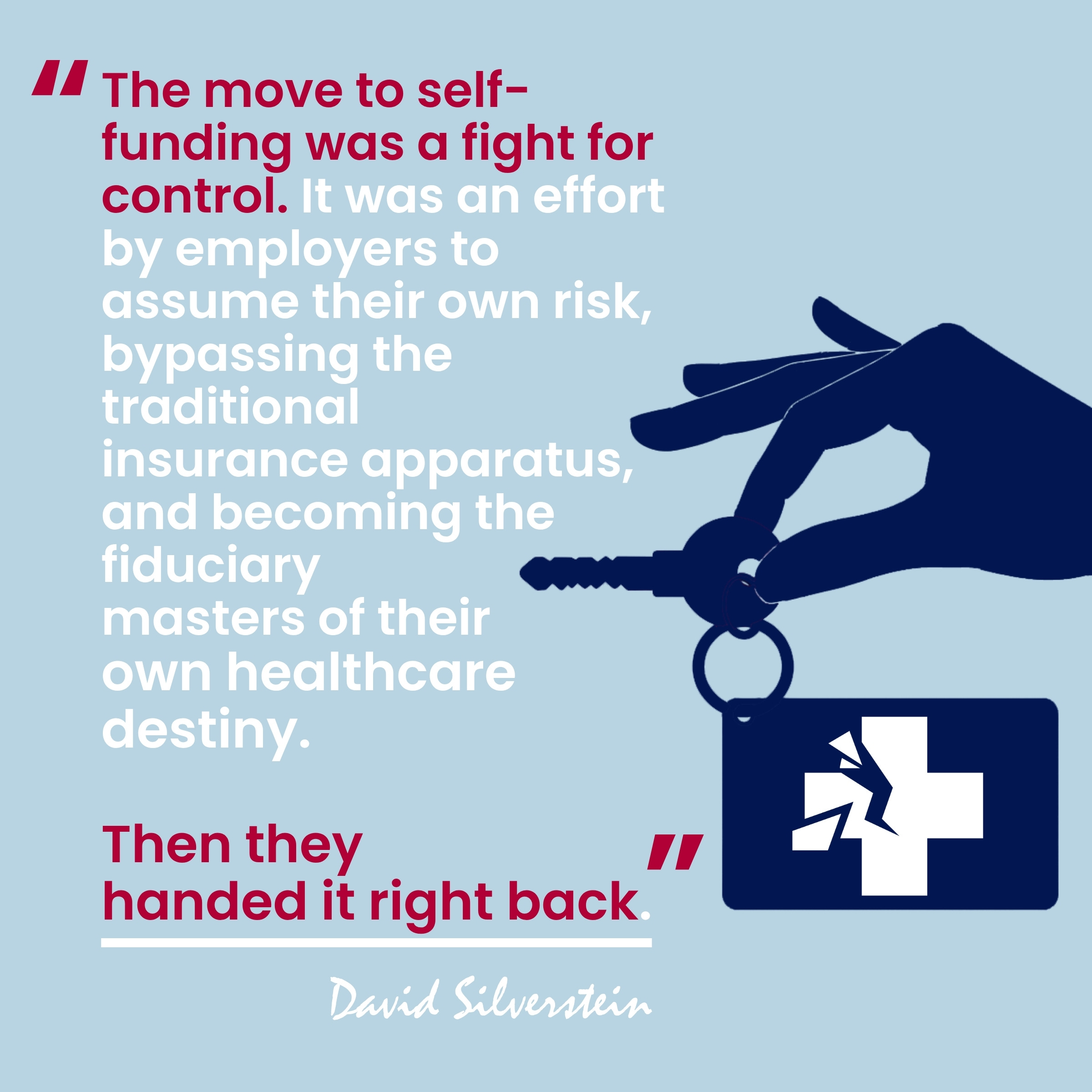
At its core, the move to self-funding was a fight for control. It was an effort by employers to assume their own risk, bypassing the traditional insurance apparatus, and becoming the fiduciary masters of their own healthcare destiny.
But, over the last few decades, a brilliant and destructive sleight of hand occurred.
The legacy carriers realized they were losing their premium revenue to self-funded employers. In response, they pivoted to offering Administrative Services Only (ASO) contracts allowing employers to “outsource” management of their health plans to them, effectively handing control right back to those they fought so hard to wrestle it from.
Over time, these ASO models became fiercely vertically integrated. The carriers bought the Pharmacy Benefit Managers (PBMs), the clinics, and the data analytics firms. They bundled everything together into opaque, take-it-or-leave-it packages.
By adopting these vertically integrated ASO models, you are ceding the very control your predecessors fought for 50 years ago. You are no longer managing your own plan; you are simply bankrolling a legacy carrier’s profit margin while letting them dictate the rules and hide the actual costs.
That logo on your employee’s ID card? It isn’t an insurance company. It is simply the name of a provider network and administrative middleman that you are drastically overpaying.
True self-insurance is not about financing a carrier’s black box; it is about unbundling the services, demanding radical price transparency, and actively managing your supply chain. It requires remembering that the money paying the claims is yours, the plan document is yours, and the ultimate responsibility to your employees is yours.
To fix your healthcare spend, you first have to remember who the insurer actually is. All you have to do is look in the mirror.