


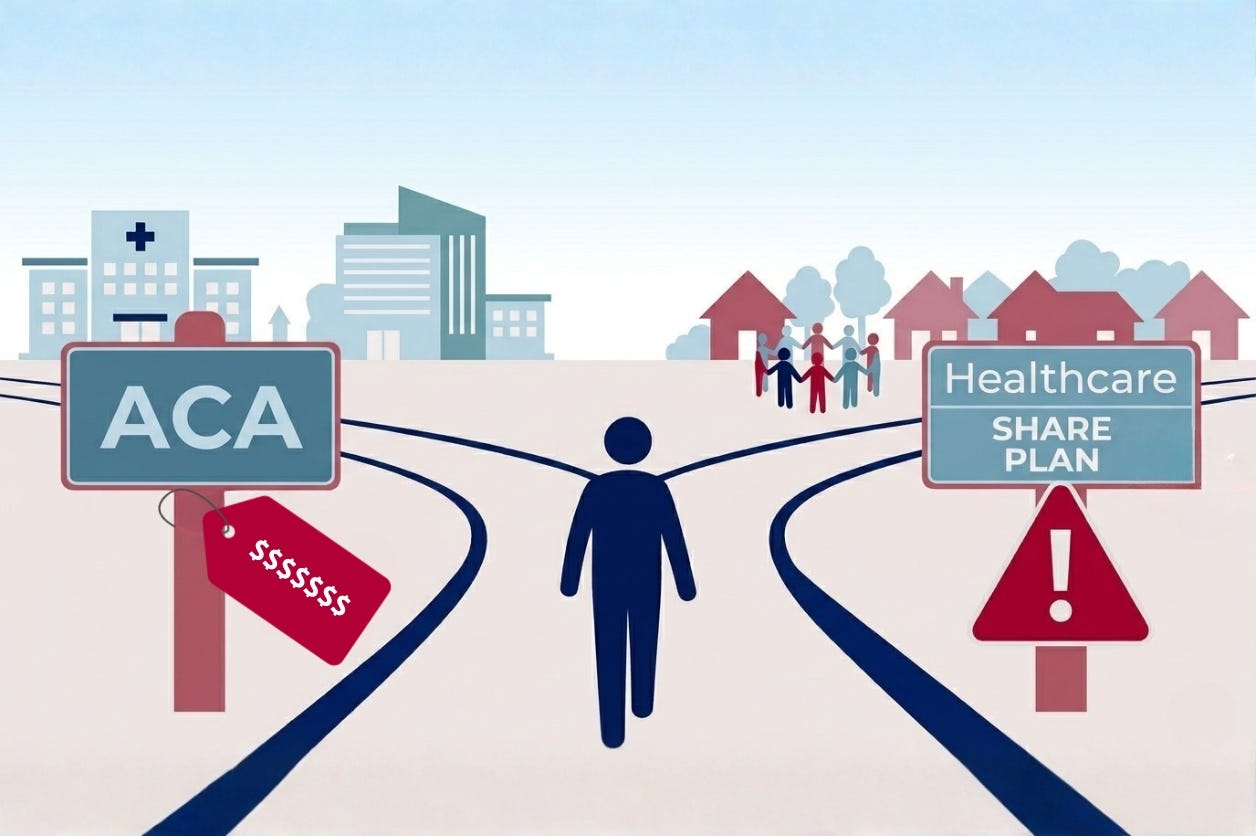
As the cost of ACA-compliant health insurance continues to climb beyond the reach of millions, a growing number of Americans are turning to an alternative that was once considered fringe: healthcare ministry share plans, or simply “share plans.” These arrangements, originally rooted in religious communities, promise lower monthly costs and a sense of solidarity. But beneath the surface, they operate as essentially unregulated health insurance—offering freedom for the healthy and financial peril for the chronically ill because of the lack of complementary products designed to manage longer term risk.
Expect these plans to proliferate, not because they are better, but because for many, they are the only option left. As a result, we have to ask ourselves whether, in some small way, these plans might offer some clues as to how to get our system back on track. After all, the lack of regulation represents the ultimate in free marketing innovation, and many people participating in such plans appear satisfied with their limited benefit.
A brief history of share plans
Share plans began decades ago as faith-based initiatives, designed for members of religious communities to pool resources and help each other with medical expenses. They were small, community-driven, and operated on trust rather than legal obligation. For years, they existed quietly on the margins of the healthcare system.
The Affordable Care Act (ACA) unintentionally accelerated their growth. When the ACA mandated that most Americans carry health insurance or pay a penalty, it carved out an exemption for members of recognized healthcare sharing ministries. This exemption gave share plans a legal foothold and a marketing opportunity. Suddenly, these plans weren’t just for small religious groups; they became a national alternative for those seeking to avoid the ACA’s mandates and costs.
The nature of share plans
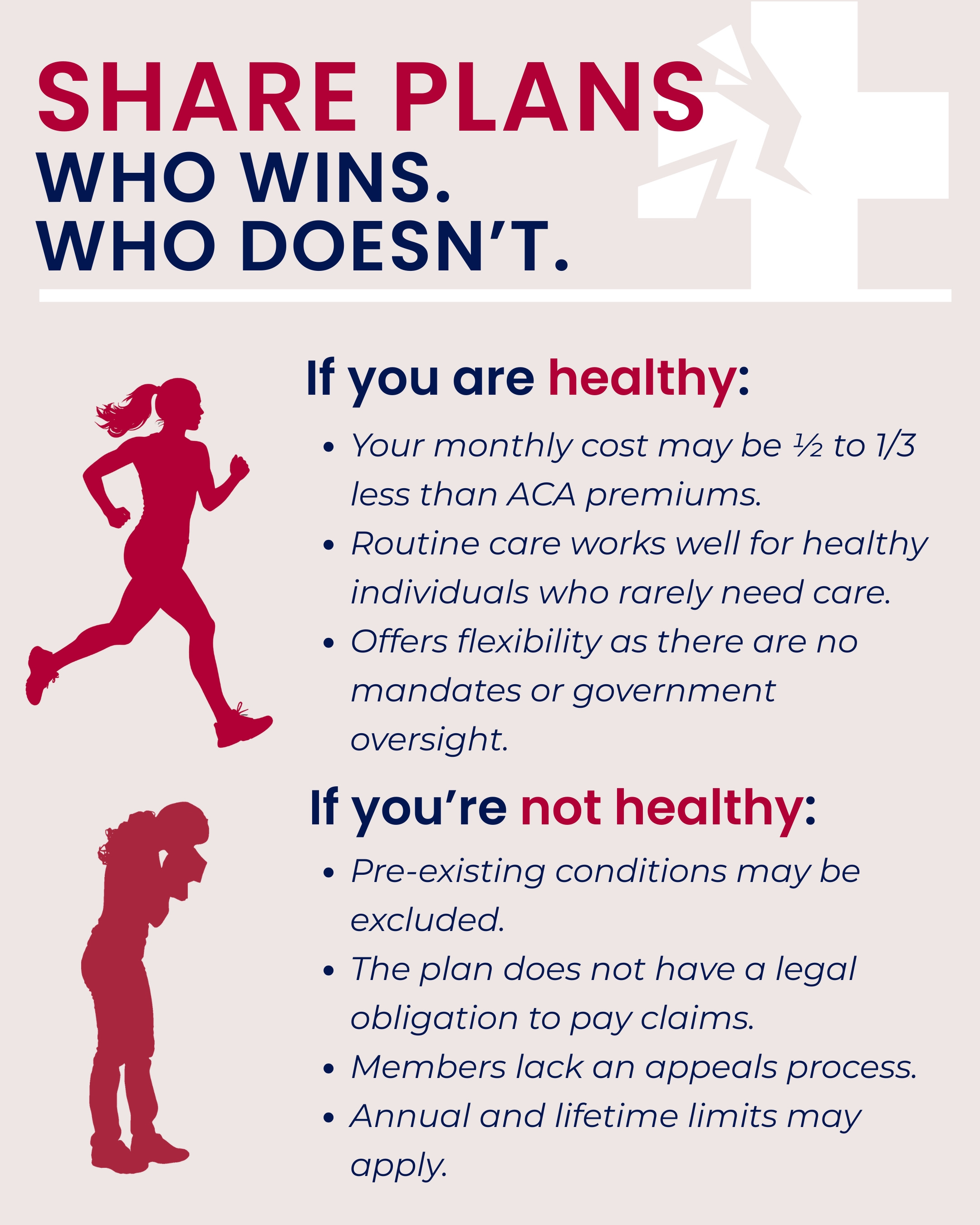
Share plans are not insurance. They make this point repeatedly in their marketing, and for good reason: by avoiding classification as insurance, they sidestep state and federal regulations that govern coverage, solvency, and consumer protections. Members pay a monthly “share,” which is pooled and used to pay other members’ medical bills. But there is no contractual obligation to pay claims. If funds run short or administrators decide a claim doesn’t meet their guidelines, the member is out of luck.
This lack of oversight means share plans can exclude pre-existing conditions, impose caps on coverage, and deny claims at their discretion. They often require members to adhere to lifestyle standards, such as abstaining from tobacco or excessive drinking, and some even require statements of faith. While marketed as community-driven, they function more like voluntary risk pools with minimal accountability.
Why they appeal to the healthy
For healthy individuals and families, share plans can look like a lifeline. Monthly costs are often half, or even a third, of ACA-compliant premiums. For someone who rarely visits a doctor, the savings are substantial. The plans also appeal to those disillusioned with traditional insurance, offering a sense of autonomy and shared values.
Marketing reinforces this appeal with glossy brochures and websites emphasizing community, freedom, and faith. For many, the choice feels empowering, that is until they get sick.
The downside for the chronically ill
Share plans are not designed for people with chronic conditions or high-cost medical needs. They typically exclude pre-existing conditions for months or years, and even when coverage applies, payments are discretionary. There are caps on annual and lifetime benefits, and members have little recourse if a claim is denied.
Stories abound of families facing financial ruin after relying on share plans for major medical events. Unlike regulated insurance, there is no guarantee of payment, no appeals process, and no state oversight. For the chronically ill, these plans can be a gamble, and often a losing one.
The economic pressure driving growth
The real driver behind the rise of share plans is not ideology, it’s economics. ACA-compliant plans have become prohibitively expensive for many middle-class families, especially those who don’t qualify for subsidies. Premiums and deductibles have soared, leaving millions with a stark choice: pay thousands per month for coverage they can barely use, or roll the dice with an unregulated alternative.
This pressure is intensifying. Healthcare costs continue to outpace wage growth, and insurers are signaling further premium hikes. As affordability collapses, expect share plans to proliferate, not because they are better, but because they are the only option for those priced out of the regulated market.
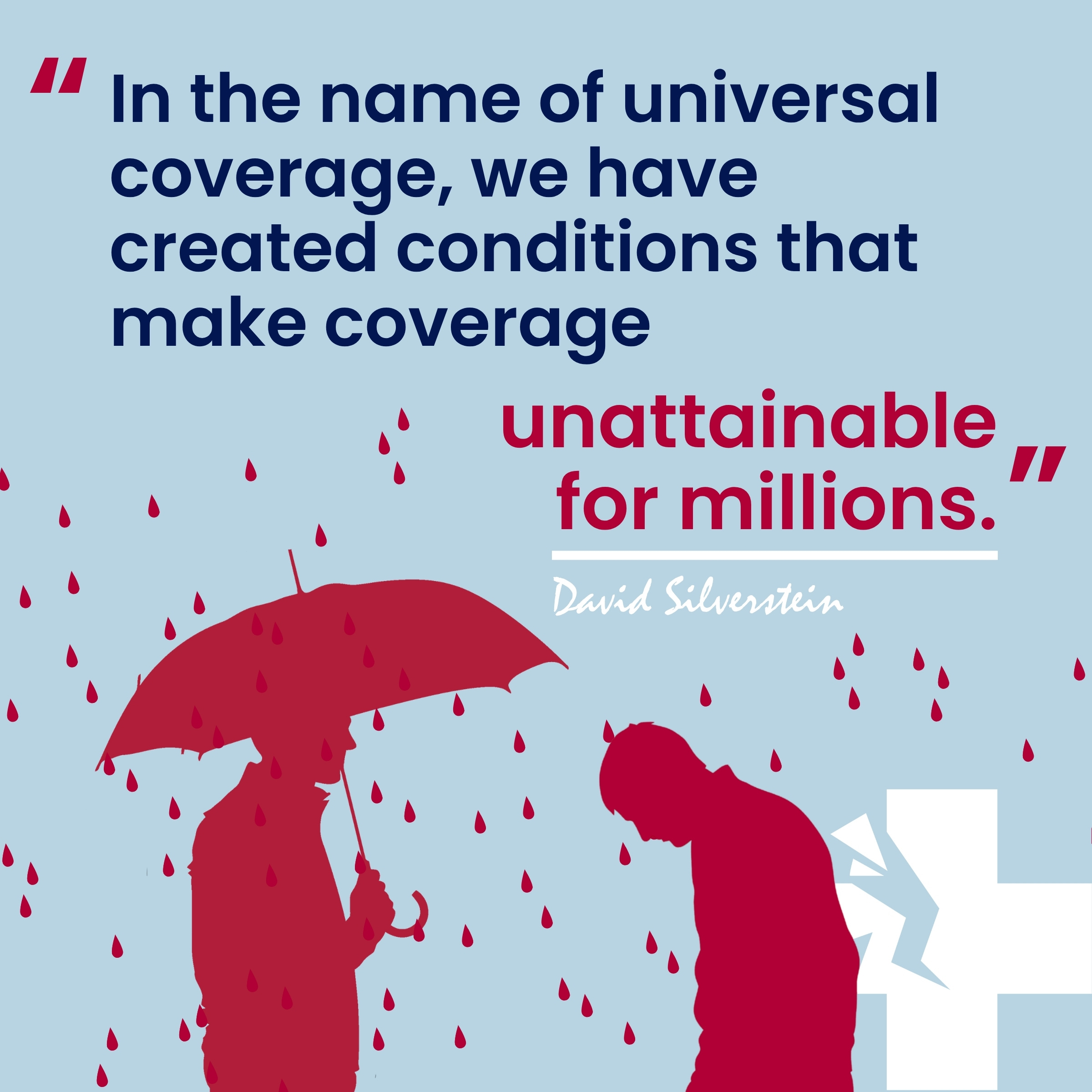
The rise of share plans is steeped in irony. These arrangements, marketed as religious and community-based, are in practice the purest expression of free-market healthcare. They operate outside the regulatory framework, free from mandates, consumer protections, and government oversight. A system designed to protect consumers, the ACA, is pushing them toward unregulated alternatives. In the name of universal coverage, we have created conditions that make coverage unattainable for millions.
What this means for the future
Share plans are no longer a fringe phenomenon. They are becoming mainstream out of necessity, not preference. For policymakers, this trend raises urgent questions: How do we protect consumers in an environment where affordability drives them to unregulated products? For families, the question is even more personal: What happens when the gamble doesn’t pay off?
The American healthcare system is at a crossroads. Share plans may offer short-term relief, but they are not a solution. They are a symptom, a warning sign that the safety net is fraying and that millions are being left behind.