


This weekend, eight NFL teams will fight for an ultimate spot in the Super Bowl. That’s what fans will see. What they don’t see are the war rooms across the league, deep into draft preparation—evaluating talent, building boards, and working through scenarios. The draft doesn’t happen until late April, but the teams that win on draft day are the ones that started preparing months earlier. Those with the highest draft picks aren’t playing this weekend. They are even more earnestly focused on the draft.
In the first round, teams get eight minutes to pick. That’s it. Months of work will come down to a decision made under pressure, one that shapes the roster and often the season that follows. Sometimes, the player a team built its strategy around is unexpectedly scooped up by a team with an earlier pick. Other times, a prospect they expected to go early in the draft is still on the board. Either way, the clock keeps running.
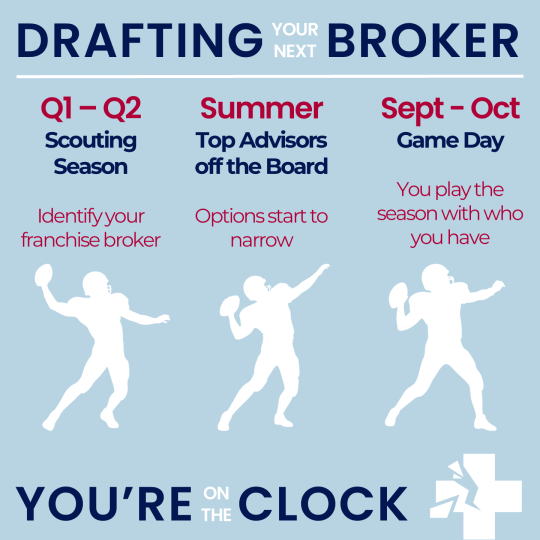
That kind of pressure isn’t unique to football. Business leaders are on the clock right now, too, though many don’t realize it yet; not to draft players, but to draft their next broker or benefits consultant. That work needs to happen now, in Q1 and Q2, before renewal season hits in September and October. And if all goes right, they might choose to re-sign their broker, much as an NFL team might re-sign a player they thought they’d lose to free agency. Whether drafting new, young blood or re-signing a veteran, there are choices to be made.
Most companies wait until summer to consider reevaluating their relationship with their broker. By then, the best advisors are already committed, and renewal season becomes about who’s available, not who you actually want to work with.
This year is different. Turnover among brokers and consultants is accelerating. A fifty percent shift wouldn’t surprise me. The advisors who know how to navigate what’s coming are already being selective about who they work with this year. I love working with them. They tend to be independent brokers or, at least, independently-minded brokers at larger agencies. They know what needs to be done this year. There are still some good guys left.
If you call a broker you’ve never spoken to in a panic in September, you’ll be too late, or you’ll be ripe for being taken advantage of.
The good ones will have been drafted.
The pressure is real
2025 delivered the steepest healthcare cost increases in over a decade. Aon and Willis Towers Watson (WTW) are projecting 8% to 14% increases again in 2026. Many saw numbers well beyond 20% in 2025. There will be many of those in ’26, too.
The problem wasn’t just the size of the increases, it was when they arrived. Renewal quotes showed up in September or October, leaving employers without time to think or room to maneuver. That’s like waiting until 30 seconds are left on the draft clock to start rethinking your pick.
Once renewal hits, you’re effectively locked in for another year. Brokers understand this dynamic. Clients churn eventually, it’s inevitable, but timing is everything. If they can string you along with promises until October, they’ve won another year.
That strategy has worked for a long time. The average broker tenure hovers around five years. COVID-19 disrupted the market in 2020, which triggered a wave of broker changes in 2021. Five years later, those relationships are hitting their expiration date, just as employers face back-to-back cost increases that make the status quo unsustainable.
The pace of change and turnover in 2026 is going to break records.
Your next move
The broker market is about to get selective. The consultants who understand what’s coming won’t have room for everyone. I’d put the number who are really willing to do what’s right for their client at about 5%. Those are the ones you want to draft, or re-sign.
If you’re three or more years into a relationship that isn’t delivering, the window to change course is Q1 and Q2; not because there’s a magic deadline, but because by summer, the best options will already be committed. You don’t want to be that team that is going into the preseason but hasn’t picked a starting quarterback yet. That doesn’t usually bode well for an NFL team, and it won’t bode well for you.
Your renewal will arrive in September, whether you’re ready or not. The only question is whether you’ll be ready to receive the bad news from a position of strength or weakness.
Remember, you are on the clock.