



Something unusual is happening in the self-funded health insurance market.
As employers receive their renewal numbers, many are doing what any rational buyer would do when confronted with a large increase: They are asking their brokers to find alternatives. That means more requests for stop-loss quotes, more carriers being asked to look at the same groups, more proposals being generated, and more negotiations taking place.
But there is a problem.
If substantially the same universe of companies is generating significantly more requests for quotations, the market has not created more business. It has created more work.
And that distinction may explain some of the frustration employers and brokers are experiencing as we approach 2027.
The snowball effect
Imagine that an employer who historically sought three stop-loss quotes now asks its broker for twice as many because the initial renewal is painful. Multiply that behavior across thousands of employers and the underwriting workload can increase substantially even though the number of employers seeking coverage has barely changed.
Then add timing.
An employer receives a difficult renewal and wants alternatives. The broker goes back to market. Underwriters receive more submissions. Responses take longer. Employers become impatient. Brokers seek still more alternatives or push existing carriers for revised terms.
The process feeds on itself. And the employer often blames the broker.
That’s understandable. The broker is the person standing between the employer and the market, so when answers are slow to arrive, it looks like a service problem. But some of what we’re experiencing may instead be a capacity problem caused by an extraordinary amount of shopping.
At the same time, the underwriting itself is becoming more difficult. As alternatives to traditional BUCA plan designs move into the mainstream, underwriters must evaluate arrangements with the potential to produce substantial savings but with far less actuarial history behind them. That means assessing unfamiliar structures, assumptions and risks with less data—and often under greater time pressure.
If that is what’s happening, the lesson for 2027 is already becoming clear: The traditional renewal calendar may no longer work.
Employers cannot wait until late in the year to discover that they have a problem. I wrote about this extensively in a series of articles in early 2026. I warned employers that they were “on the clock” and that an industry strategy was to run out the clock on them. And that’s exactly where many find themselves today.
The issue is bigger than stop-loss
The underwriting bottleneck is important, but it is really symptomatic of something much larger. Healthcare costs are under pressure from multiple directions simultaneously, and several of those pressures have the potential to compound.
Start with pharmaceuticals.
For years, employers have been told that the expiration of patents and arrival of generics and biosimilars will provide relief from rising drug costs. And they do provide relief in individual categories.
But the other side of that equation is an extraordinary pipeline of sophisticated new therapies.
Obesity drugs demonstrated how quickly a new class of medications can create both enormous clinical demand and enormous financial exposure. Oncology, rare-disease therapies, cell and gene therapies, autoimmune drugs and other specialty medications continue to push medicine into areas that would have seemed impossible a generation ago.
That is wonderful news for patients, but someone still has to pay for it.
For every expensive drug eventually moving toward generic or biosimilar competition, employers must contend with new therapies entering the system carrying very different price tags.
And pharmaceuticals aren’t the only source of pressure.
AI is making healthcare more expensive before it makes it cheaper
Healthcare is embracing artificial intelligence, and much of that technology has tremendous potential. But employers should be careful about assuming AI automatically reduces healthcare spending.
One rapidly expanding use of AI is helping clinicians document patient encounters. Ambient systems can listen to a visit and help construct the clinical record. Coding technology can then identify diagnoses, services and other information that supports billing.
From a physician’s perspective, that’s enormously useful. Doctors have spent years complaining, correctly, that documentation and administrative work consume too much of their time, but there is another side to improved documentation.
Technology that becomes better at identifying everything that can legitimately be documented and billed can also become better at generating revenue. A fee-based system built on an obsolete coding system that generates claims is at the core of our healthcare system’s dysfunction, and now that system is being fully weaponized.
What looks like efficiency to a provider translates into considerably higher claims expense for purchasers.
That doesn’t make AI bad. It demonstrates one of healthcare’s fundamental problems: technology operates inside the incentives we give it. Said differently, we get what we pay for.
If the economic system rewards providers for identifying more billable activity, technology that becomes better at finding billable activity can increase rather than decrease healthcare spending.
Consolidation is changing the incentives, too
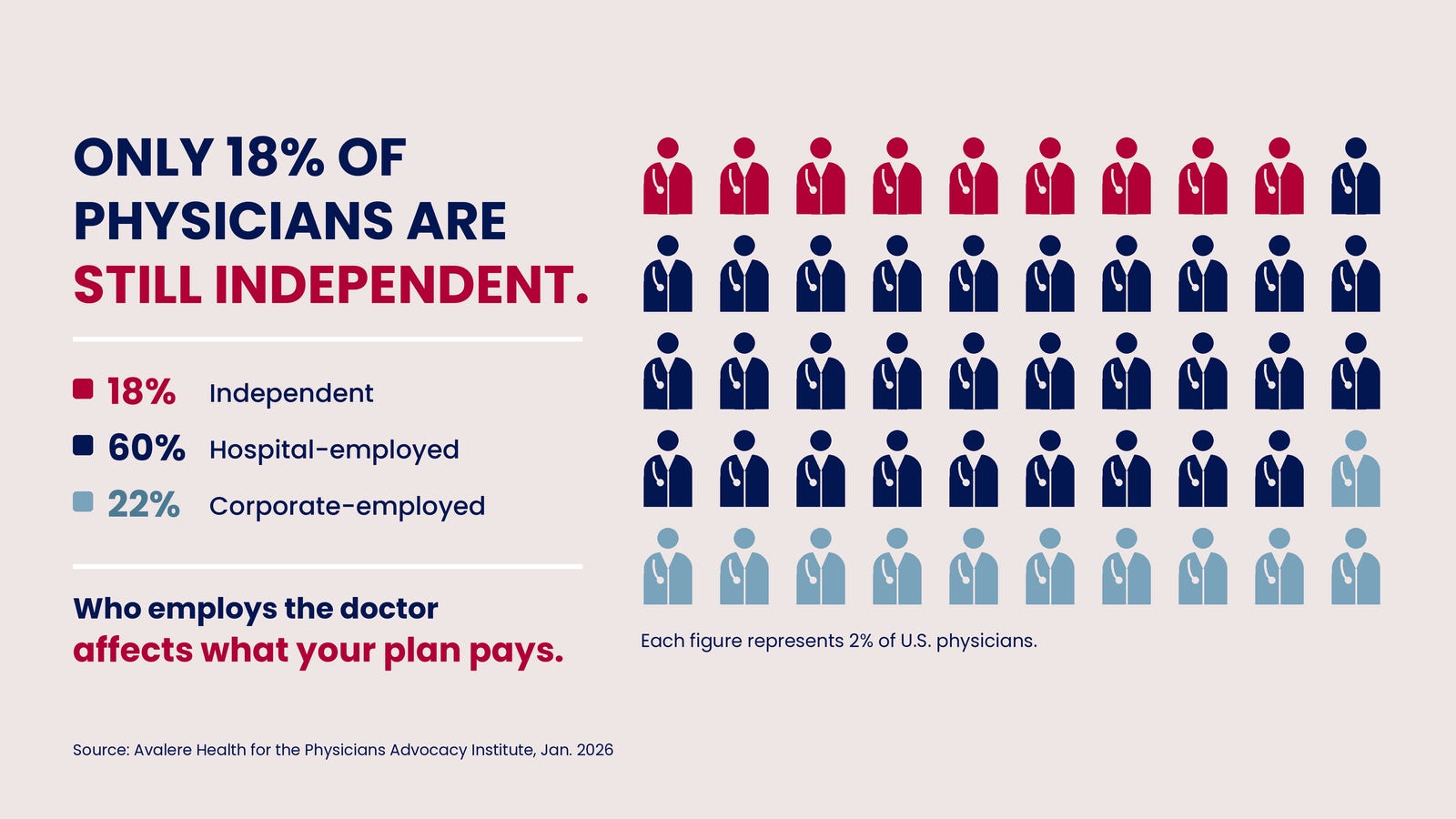
At the same time, more physicians are operating inside larger economic organizations.
Hospital systems, private-equity-backed groups and other consolidators don’t merely own medical practices. They create economic ecosystems.
A physician’s referral is no longer necessarily just a clinical decision about where a patient should receive the next service. It can also determine whether revenue remains within their parent or affiliated system.
The result is another potential inflationary force because it createes more opportunity to direct patients toward affiliated imaging centers, specialists, laboratories, facilities and procedures.
Again, the problem isn’t that every referral is inappropriate. Most aren’t. The problem is structural.
Healthcare purchasers have built a system in which many of the participants making decisions about consumption are financially rewarded when more healthcare is consumed.
Then we act surprised when utilization and spending grow.
Even the mechanisms designed to constrain prices can have unintended effects.
The No Surprises Act provides another important example.
The law addressed a genuine and outrageous problem: patients receiving care, frequently in situations where they had very little practical choice, and later discovering enormous out-of-network bills.
Protecting patients from those bills was the right objective. But removing the patient from a payment dispute doesn’t make the underlying economic dispute disappear. It moves that dispute elsewhere.
The federal independent dispute resolution process now sits between providers and payers in many of those situations. As that process evolves, employers need to pay attention not only to whether patients are protected, but also to the prices ultimately flowing back into health plans.
A reform can successfully solve one problem while inadvertently increasing pressure somewhere else.
Healthcare has a long history of doing exactly that.
Now compound all of it
This is where the story becomes much more consequential. First, employers face the normal inflation experienced by every business; and general inflation is running hot. That’s the baseline.
Then layer on medical inflation, expensive new pharmaceuticals, provider consolidation and vertical integration.
Next is fast emerging AI technology capable of maximizing documentation and reimbursement. And there’s the continued battles over the highest out-of-network reimbursement levels.
None of these forces exist independently. They compound.
A company can survive a bad renewal. It can survive another one the year after that.
The harder question is what happens when employers begin projecting today’s healthcare inflation forward five or ten years and realize what compounding does to the numbers.
At some point the discussion changes from:
“How do we get a better renewal?”
to:
“Why are we buying healthcare this way in the first place?”
I believe we have arrived at that point, which is the whole premise of my book The Lean Health Plan: How American Businesses Can Fix Our Broken Healthcare System.

2027 may be the beginning, not the event
For years, employers have complained about healthcare costs while making relatively incremental changes. They change carriers. They change networks. They change PBMs. They raise deductibles. They increase employee contributions. They add another point solution.
Then they repeat the exercise the following year.
There have certainly been important innovations since the Affordable Care Act became law, but most employers still fundamentally purchase and finance healthcare through structures that would be recognizable to someone who left the industry two decades ago.
That is finally changing.
The pressure appearing in the stop-loss market is one early signal. Employers aren’t simply negotiating harder. They are searching harder. And that distinction matters.
Searching suggests dissatisfaction with the available answer, not merely the available price. And if employers conclude that another round of bidding among largely similar solutions cannot solve the underlying problem, they will become increasingly willing to consider approaches that previously seemed too disruptive.
That could mean reconsidering networks, pharmacy procurement, direct contracting, navigation, centers of excellence, primary-care models, plan architecture and the fundamental role employers play as purchasers of healthcare.
In other words, the next era may be less about negotiating a better annual increase and more about redesigning what—and how—employers are buying at all.
Start earlier, and think bigger
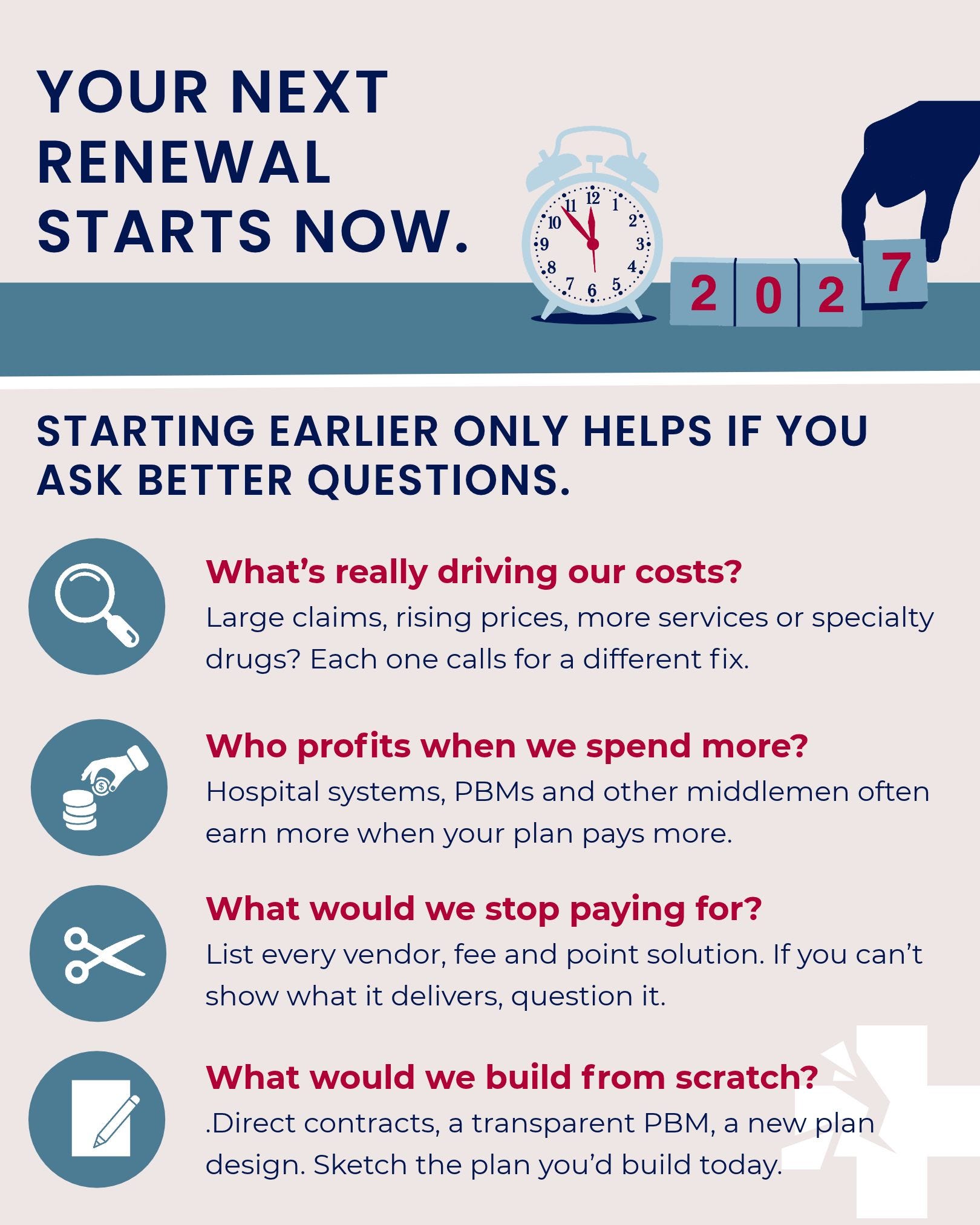
There is an immediate lesson for brokers and employers: Start earlier.
If the market is becoming more complex, if employers are seeking more alternatives, and if underwriting resources are being stretched by more shopping, waiting until the traditional renewal season creates unnecessary risks, limits options, and erodes flexibility.
But starting the same process earlier isn’t enough.
Employers should also use that additional time to ask questions that don’t fit neatly into the renewal spreadsheet.
What is driving our cost? Which elements of the healthcare supply chain are creating measurable value? Where are incentives working against us? What are we buying simply because that’s the way employer healthcare has always been purchased? And what would we design differently if we started with a blank sheet of paper?
Those questions matter because I don’t think 2027 will simply be another difficult renewal year. It will prove to be the beginning of a much larger period of change.
Employers are reaching the limits of their willingness to absorb relentless healthcare inflation. Employees cannot indefinitely absorb the cost either. And the arithmetic of compounding eventually overwhelms incremental solutions.
We may therefore be entering something we haven’t experienced in a generation: not a year of disruption, but a decade.
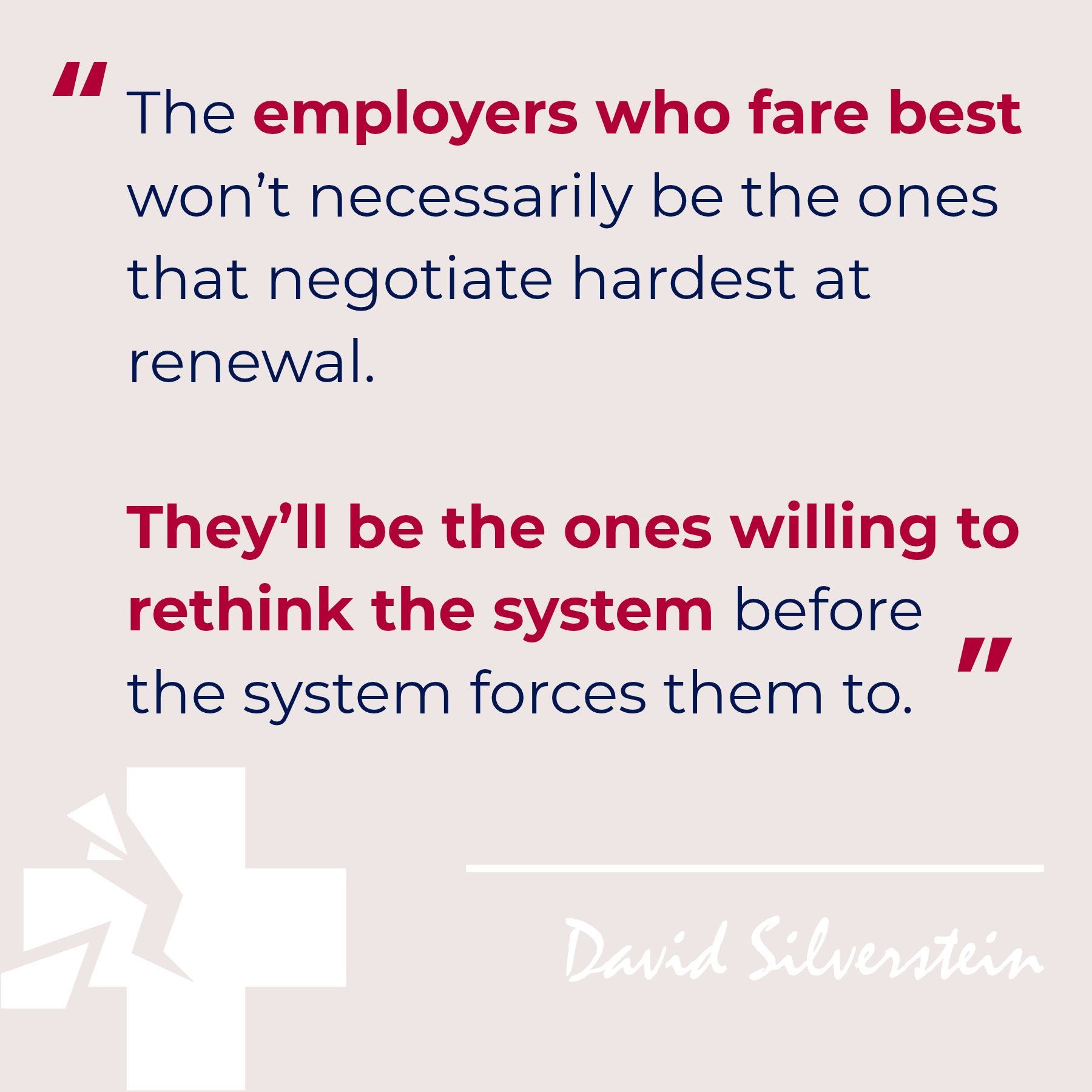
And if that’s right, the employers who fare best won’t necessarily be the ones that negotiate hardest at renewal. They’ll be the ones willing to rethink the system before the system forces them to.