



I’ve been hard on brokers and benefit consultants lately. If you’ve followed my writing, you might conclude that I don’t like them, or that I view them with a certain level of disdain. To an extent, you’d be right, but it’s not the people I lack respect for. It is the system they inhabit and, by extension, the companies that demand their silence.
I learned this the hard way.
Back in 2018 and 2019, I was in the trenches of the efforts to bring real price transparency to healthcare. I authored legislation and a citizen ballot measure in Colorado. I played a significant role in shaping what we now know as the ‘Transparency-in-Coverage’ rules, the product of a June 2019 Executive Order.
During that time, I met hundreds of stakeholders, and I never met a single person who vocally opposed price transparency in private. Yet my first two efforts were defeated.
If you’re scratching your head, you should be.
The two faces of the C-suite
I sat down with lobbyists, hospital CEOs, and insurance executives. Behind closed doors, over coffee or a beer, the sentiment was universal: “David, I agree with you. I really hope you get this done.” But when testimony began at legislative committee hearings, there was total silence from the people I’d spoken with, and in some cases, active opposition from the organizations they represented.
One hospital CEO told me flatly: “If I publicly support your efforts, my board will likely fire me.” I knew he wasn’t exaggerating.
Where are the “real people”?
In the U.S., we have what we call “third rail issues”—topics so divisive that touching them can end a political career: guns, abortion, immigration, and so forth. On those issues, there are “real people” who will stand in the rain to protest for what they believe in. Many will even fight. There is a core of genuine, passionate humanity at the center of the debate. You can disagree with them, but you can’t deny they exist.
The fight for healthcare price transparency was different. There were no “real people” on the other side.
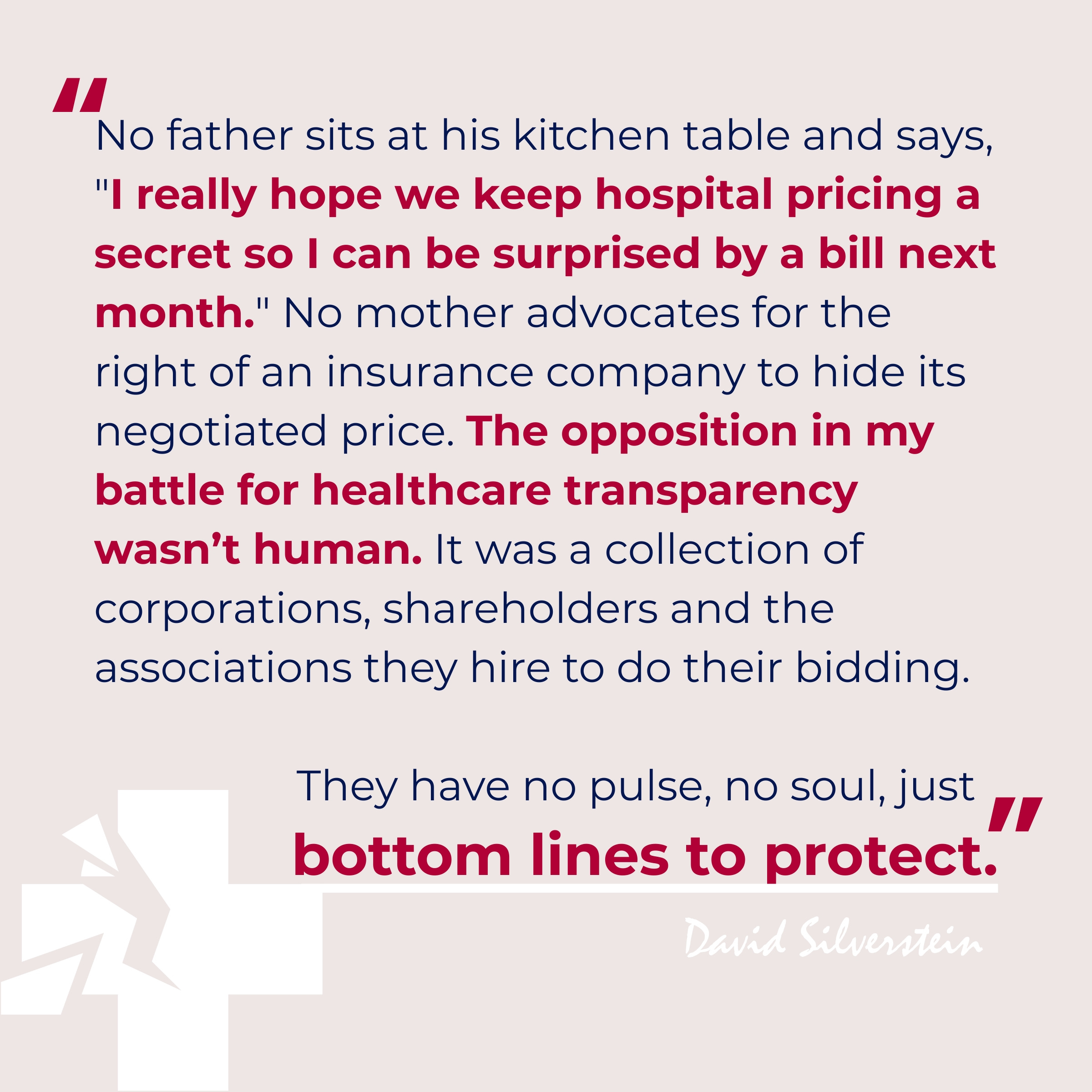
Think about it. No father sits at his kitchen table and says, “I really hope we keep hospital pricing a secret so I can be surprised by a bill next month.” Likewise, no mother advocates for the right of an insurance company to hide its negotiated price.
The opposition I faced wasn’t human. It was a ghost—a collection of corporations, shareholders and the associations they hire to do their bidding. They have no pulse, no soul, just bottom lines to protect.
Survival vs. cowardice
Are the people who believe in price transparency but won’t support it publicly cowards? It would be easy to say yes, but I’ve come to understand that for most, it was more a matter of survival.
Insurance brokers and benefit consultants at the large agencies often find themselves in the exact same boat. While smaller independent brokers have the freedom to steer their clients in new directions, those at the “Big Houses” are often trapped. Bucking the system is fraught with peril. If a consultant speaks up, they put the firm’s financial incentives and carrier overrides at risk, and in turn, they put themselves at risk.
In private, these brokers tell me they know their clients are being fleeced. They admit the system is broken, but when push comes to shove, they often toe the party line.
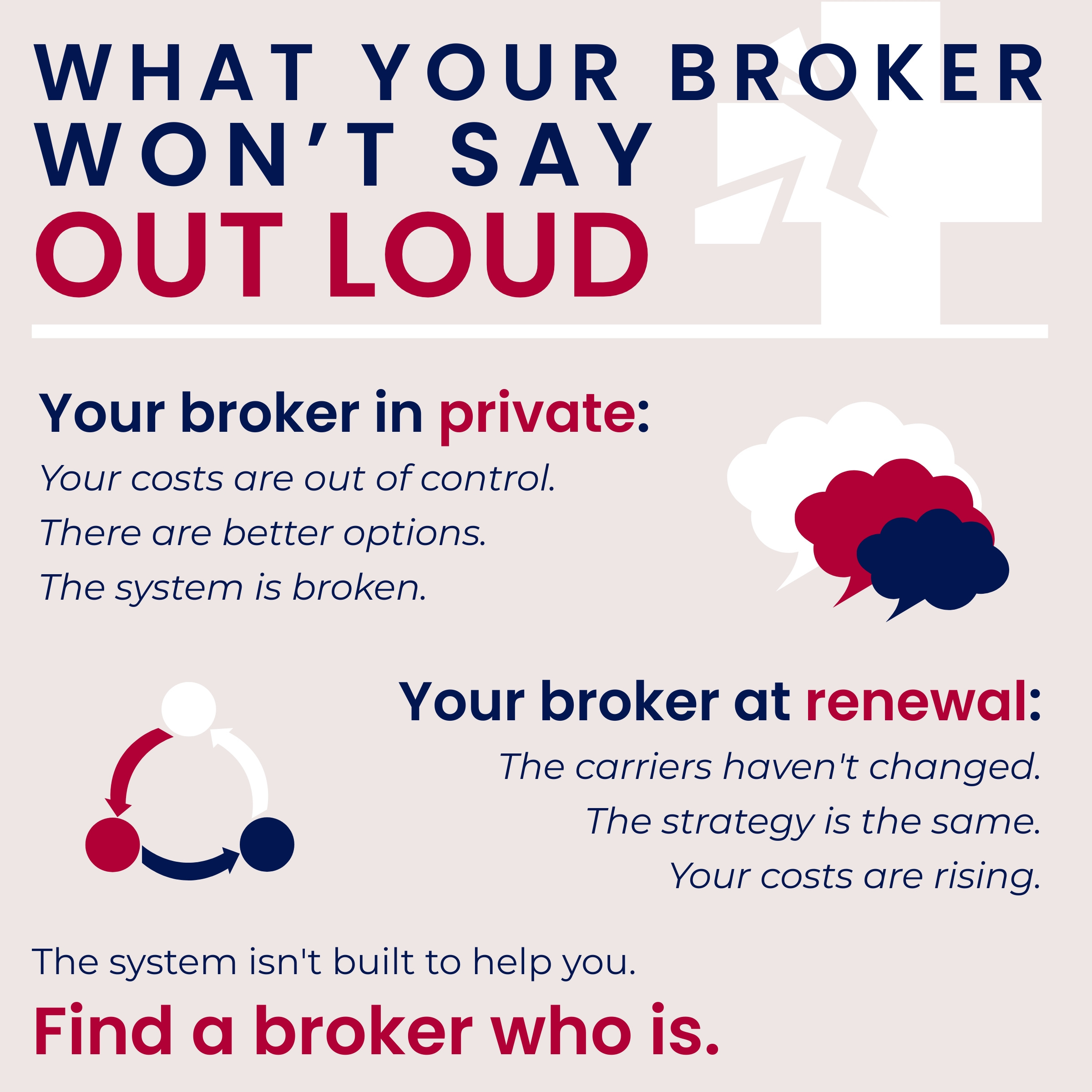
Some are starting to break free, one-by-one, but in many cases it’s because they need to, not because it’s the right thing to do. Only when faced with the risk of losing a client after a year of big hikes in healthcare costs do they put true change on the table. They might not be cowards, but they’re also not showing courage. Courage would be proposing changes when it’s right, not when it’s required. That’s what a true, trusted advisor would do.
Brokers aren’t “bad people,” but they do work in a bad system—a system that has made honesty and transparency a liability. Until we change the incentives that force good people to act like cowards to survive, the “ghost” will keep winning.
It warrants repeating, I don’t hate brokers and benefit consultants. In fact, I like most of them—behind closed doors. What I hate is that the system won’t let them step into the light.
If you’re a broker reading this and you’re trapped in that system, know that there’s a way out. The employers who will value you most are the ones looking for honesty, not compliance.
And if you’re an employer waiting for your broker to bring you the truth? Understand that if they’re stuck in this system, they can’t save you, no matter how much they might want to.